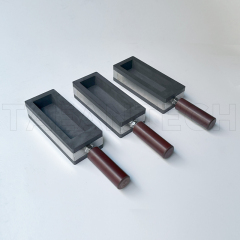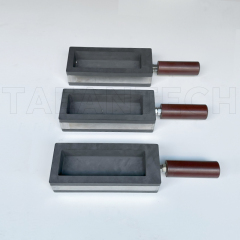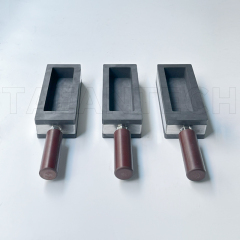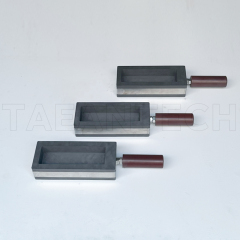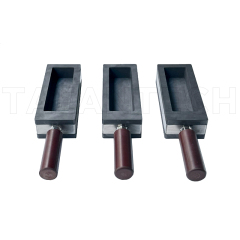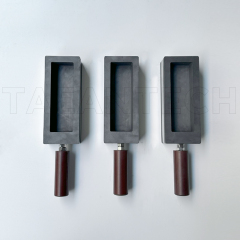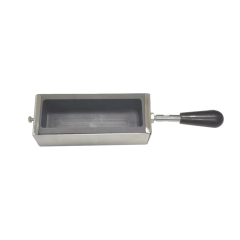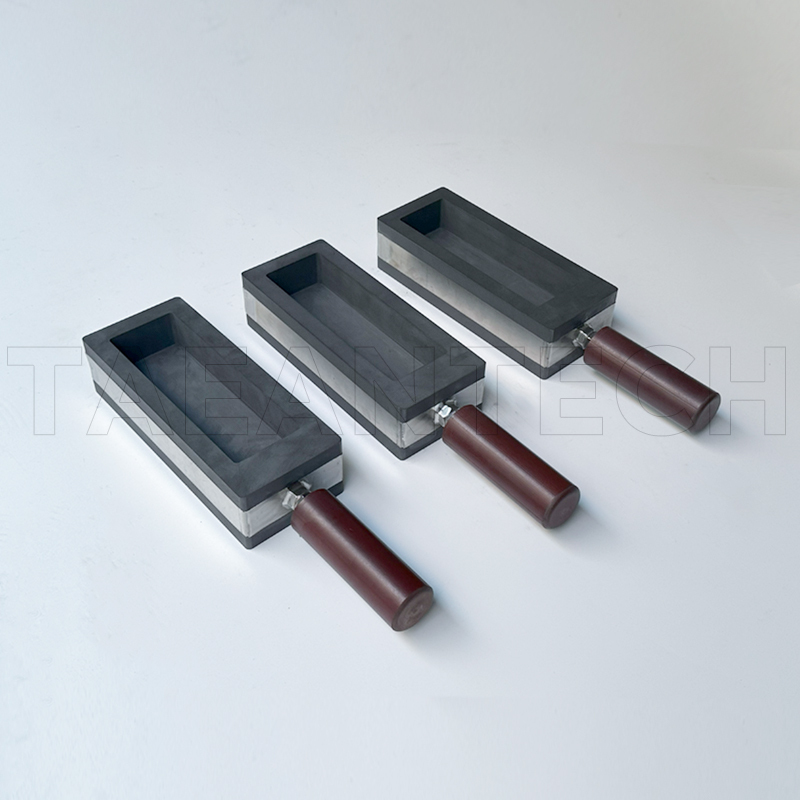
Economical: Pouring graphite mold price is low, economic, reduce production costs.
Excellent Thermal Conductivity: The thermal conductivity of graphite is better than that of steel, iron, lead and other metal materials. During the pouring process, the graphite mold can quickly and evenly transfer heat, reduce temperature gradient and improve casting quality.
Chemical Stability: The pouring graphite mold has good chemical stability and can resist acid, alkali and organic solution corrosion. At high temperatures, graphite does not react with most metal melts and is suitable for the pouring of a variety of metal materials.
Lightweight and Durable: graphite density is low, mold weight is light, easy to operate and handle. Despite its light weight, high-purity graphite has high mechanical strength and can withstand pressure and shock during the pouring process.
Environmental protection and energy saving: The cast graphite mold can generate CO, CO₂ protective gas layer at high temperature, reduce the oxidation of gold and silver bars during the pouring process, reduce energy consumption, and reduce environmental pollution.
Reusable: the pouring graphite mold can be reused many times, and the surface finish of the pouring after demoulding is high, which reduces the subsequent processing process and improves the production efficiency.


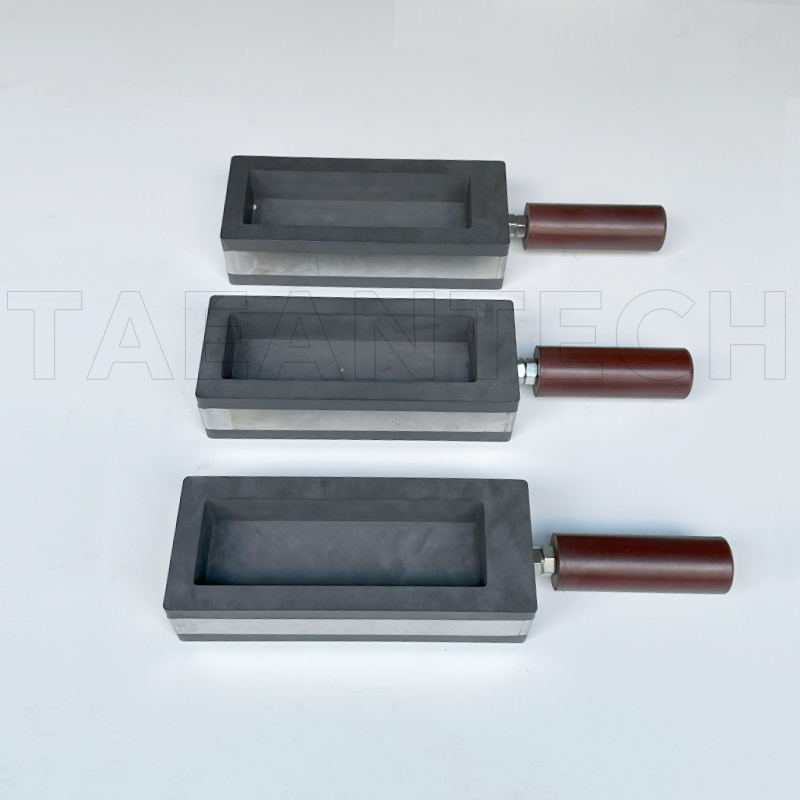
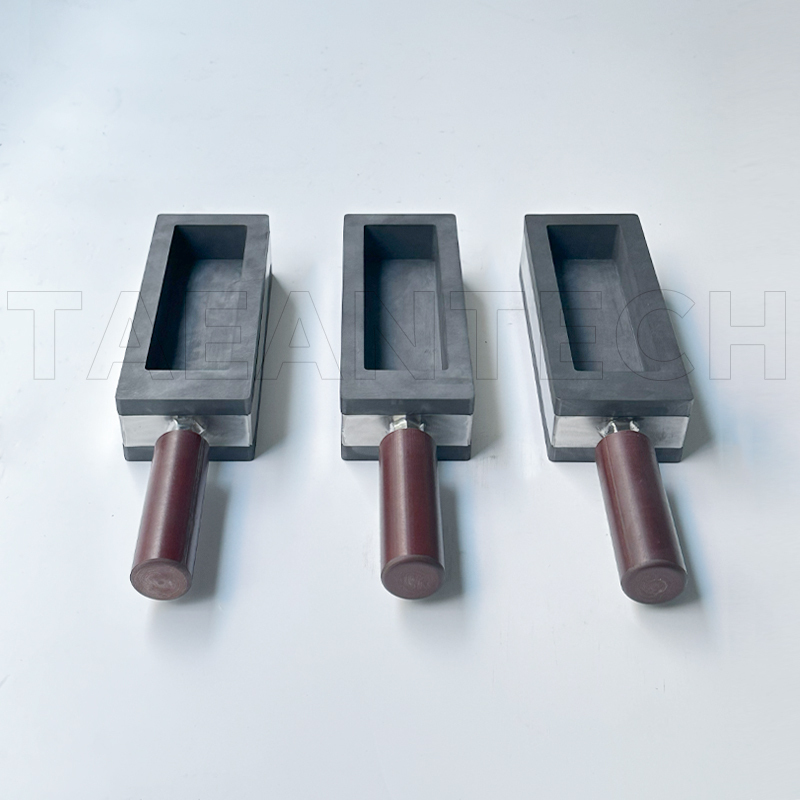
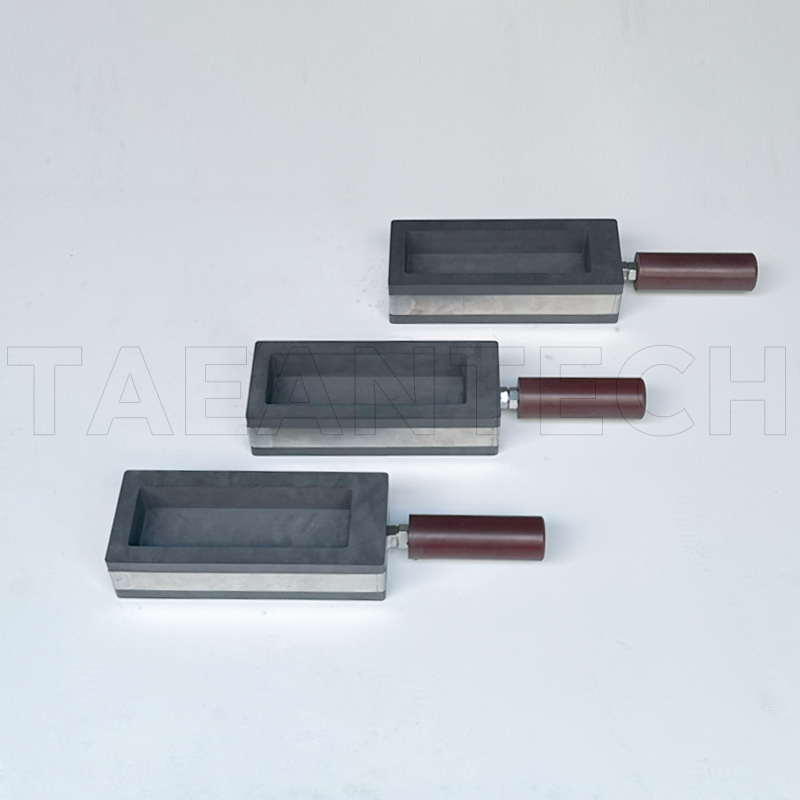
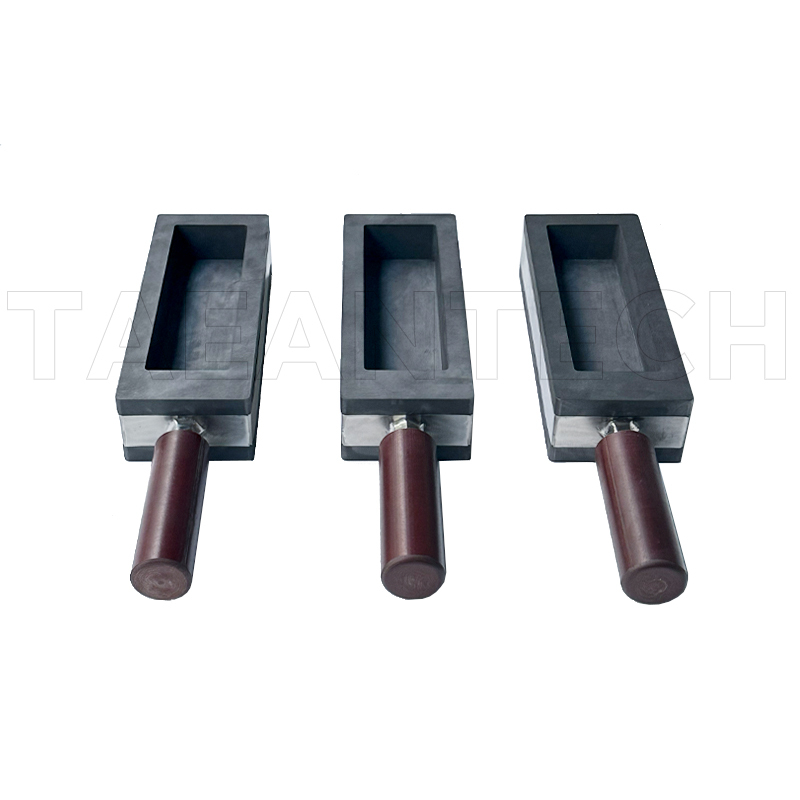
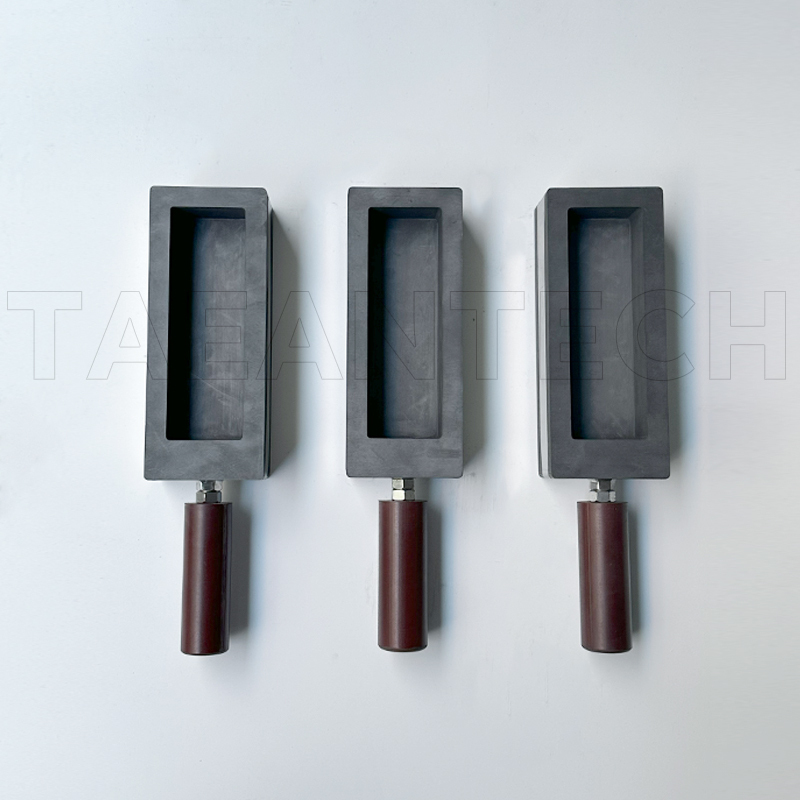
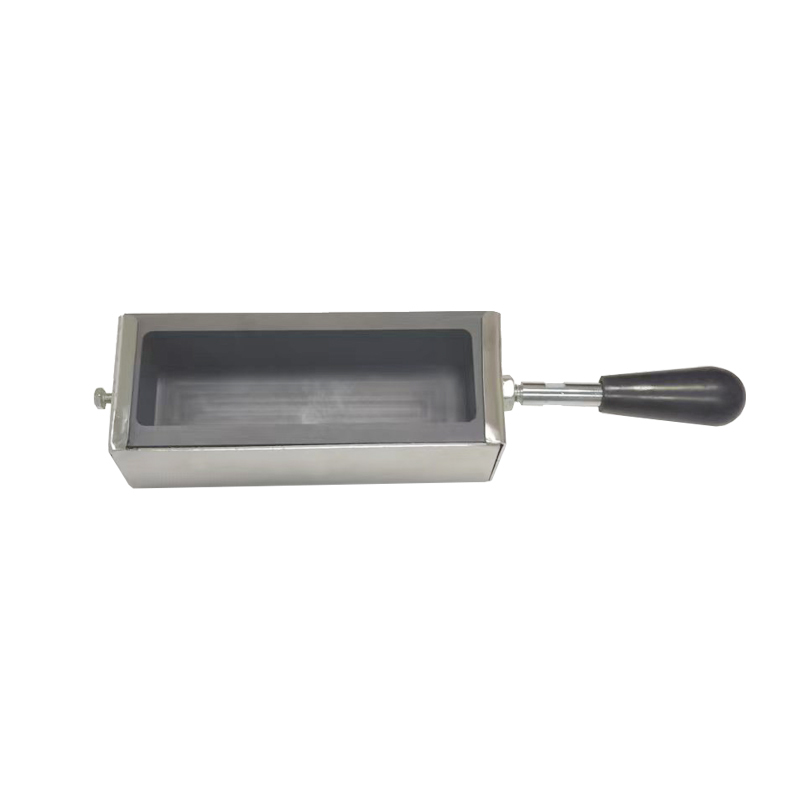
Yes, this mold is built for gold melting machine and casting machine work, with a graphite strip handle that carries it in and out of the heat. Your results depend on how the body sits in your own unit, so measure the clearance around your crucible and the handle travel before you commit, and take the weight of your usual pour into account when you size the cavity.
Once you pour, the graphite reacts with the air at the surface to form protective CO/CO₂ layers, and those layers sit between your molten metal and the oxygen around it. That keeps an oxide skin off the gold, so the strip comes out bright rather than dull. Start each pour with a clean, dry cavity; oil or residue left in it works against those layers forming.
Yes. Graphite carries heat quickly across the mold body, so the metal in the cavity sees a more even temperature and fewer gradients between the centre and the edges. In practice you get a fuller, more even fill and less risk of a short strip where metal chilled before it reached the end of the cavity. Bring the mold up to a steady temperature before each pour rather than dropping molten metal into a cold body.
No. High-purity graphite resists reaction with molten metals, acids and alkalis, so it does not donate anything to the gold sitting in it, and your assay holds from the first strip to the last. The real contamination risk is what you leave on the mold: brush the cavity out between pours and store it dry, because flux or crucible residue baked into the surface will find its way into your next melt.
Yes. As a custom graphite mold supplier we build non-stock configurations, so if the standard strip-handle shape does not sit in your line, send a drawing instead: cavity dimensions, strip width and thickness, handle length and the angle it enters the furnace. Measure from your existing setup rather than working from a photo, and mark the tolerances that matter for fit. A custom mold is only as good as the drawing behind it, so check it twice before it is released.
Yes. The mold is reusable and holds up across repeated batches; that repeatability is where the cost case sits, since one body covers many pours instead of one. Its low density keeps it light enough to handle all shift without tiring whoever is working the furnace. Between heats, treat it gently: thermal shock and knocks on the bench, not the pour itself, are what end a graphite mold's life.