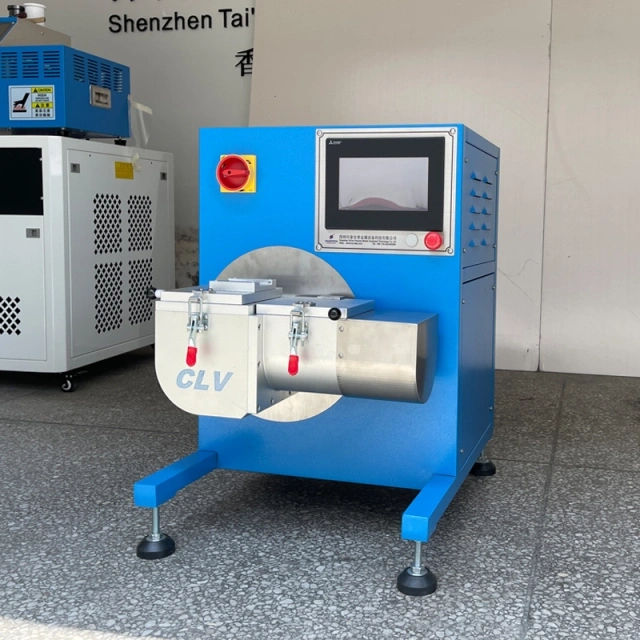
TAEANTECH 500g mini Rotary Vacuum Casting Machine For Platinum
Taeantech 500g mini rotary vacuum casting machine features a dual-chamber design and 2100°C temp for platinum and gold. Ideal for studios and dental clinics.
View productPrecious-metal powder production stands or falls on repeatable particle size, and every choice on this page is built around that single outcome. Taeantech supplies metal atomization powder machines that run from a 1 kg platinum batch up to a 30 kg gold melt, and its role as a metal atomization equipment manufacturer means the melting room, casting room and intelligent control system are engineered as one unit instead of being assembled from separate suppliers.

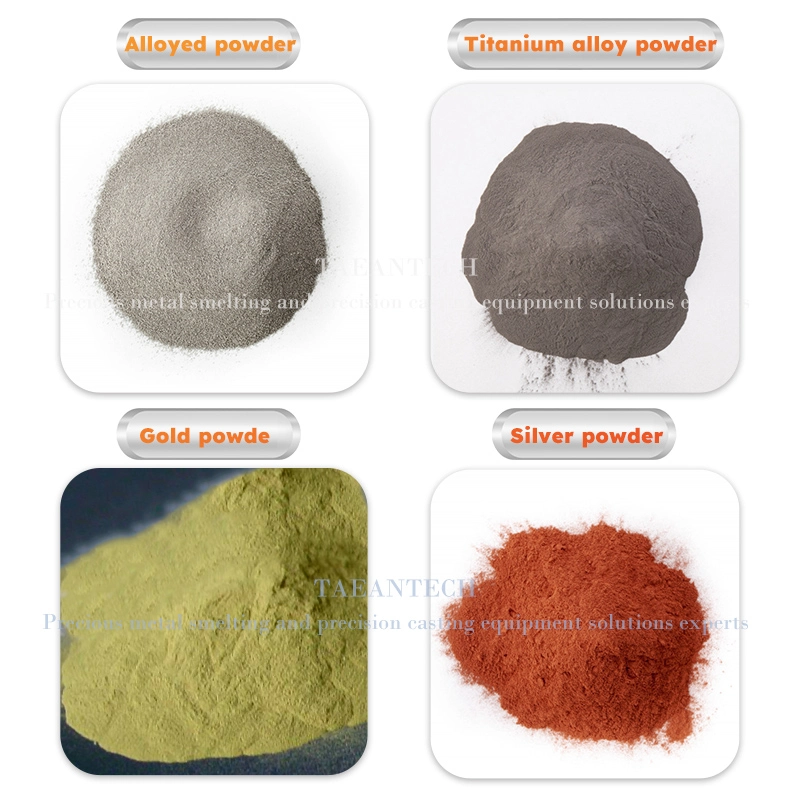
Water atomization converts molten metal into powder in a single continuous pass. Instead of grinding solid metal, the machine melts the feedstock and then breaks the falling metal stream apart with high-pressure water jets, so the powder is formed while the metal is still liquid and freezes into irregular particles almost instantly. Particle size is not fixed by tooling: on this machine the mesh size is controlled by adjusting the water pressure, and the page notes that around 90% of the powder produced falls below 50 mesh.
Eddy currents prepared by IGBT induction heat the raw material inside the melting room, up to 2200 ℃, with no open flame contacting the metal.
A high-pressure water jet — delivered through an atomizing disk built with imported German components — shears the molten stream into fine droplets.
The droplets freeze rapidly in the casting room, producing the characteristic irregular, angular water-atomized powder shape.
Water pressure setting defines the mesh window, so the same machine can serve a coarse solder powder order and a finer alloy batch.
Very high cooling rate and a mechanically simple setup, which suits precious-metal, solder and alloy powders where cost per kilo and fast grade changes matter more than perfectly spherical particles.
Gas atomization baths the melt in inert gas and generally yields rounder, more spherical particles for flow-critical applications. Water atomization trades that shape control for lower running cost and a wider practical mesh window.
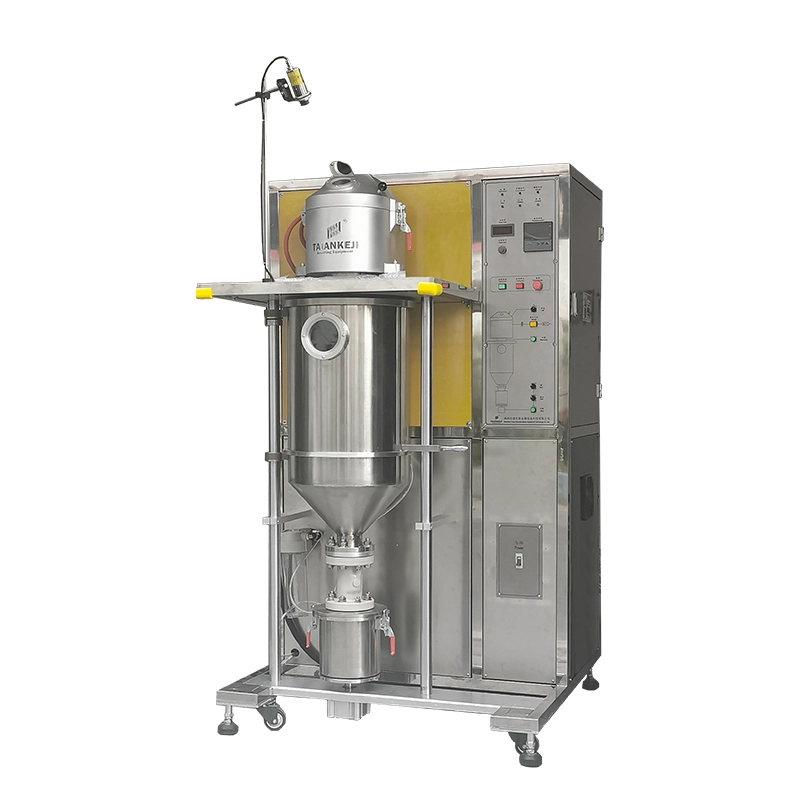
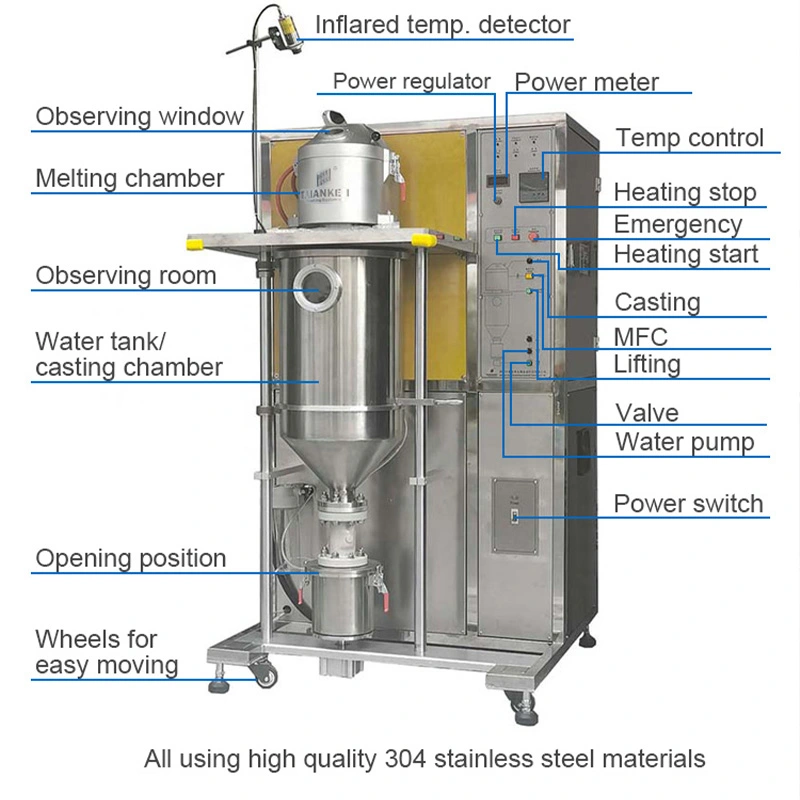
The atomizer family is documented with two parameter sets.
| Parameter | GMI10 | QMI10 |
|---|---|---|
| Voltage | 380 V, 3 phases, 50/60 Hz | 380 V, 3 phases, 50/60 Hz |
| Total power supply | 8 kW | 30 kW |
| Max temperature | 1500 ℃ | 2100 ℃ |
| Melting time | 5–30 min | 2–10 min |
| Powder size | 50–200 mesh | 50–200 mesh |
| Temperature accuracy | ±1 ℃ | ±1 ℃ |
| Capacity | 10 kg (gold) | 10 kg (gold) |
| Water pressure | 0.2–0.4 MPa | 0.2–0.4 MPa |
| Water temperature | 18–22 ℃ | 18–22 ℃ |
| Atomizing disk | Imported German components and technology | Imported German components and technology |
| Vacuum pump | High-level vacuum degree pump | High-level vacuum degree pump |
| Control system | Mitsubishi PLC + human-machine interface | Mitsubishi PLC + human-machine interface |
| Shielding gas | Nitrogen / argon | Nitrogen / argon |
| Dimensions | 3400 × 3200 × 3880 mm | 3400 × 3200 × 3880 mm |
| Weight | Approx. 2800 kg | Approx. 2800 kg |
Reconcile before ordering. The product page quotes two sets of figures. The quick-spec block and the melting-room description state a 50–300 mesh window, up to 2200 ℃, and a 1–30 kg gold capacity with 1 kg for platinum, while the parameter table above and the FAQ list 50–200 mesh, 1500 ℃ / 2100 ℃, and 10 kg (gold) per model. Tell the team your alloy and target mesh so the final configuration sheet matches your process rather than the marketing headline.
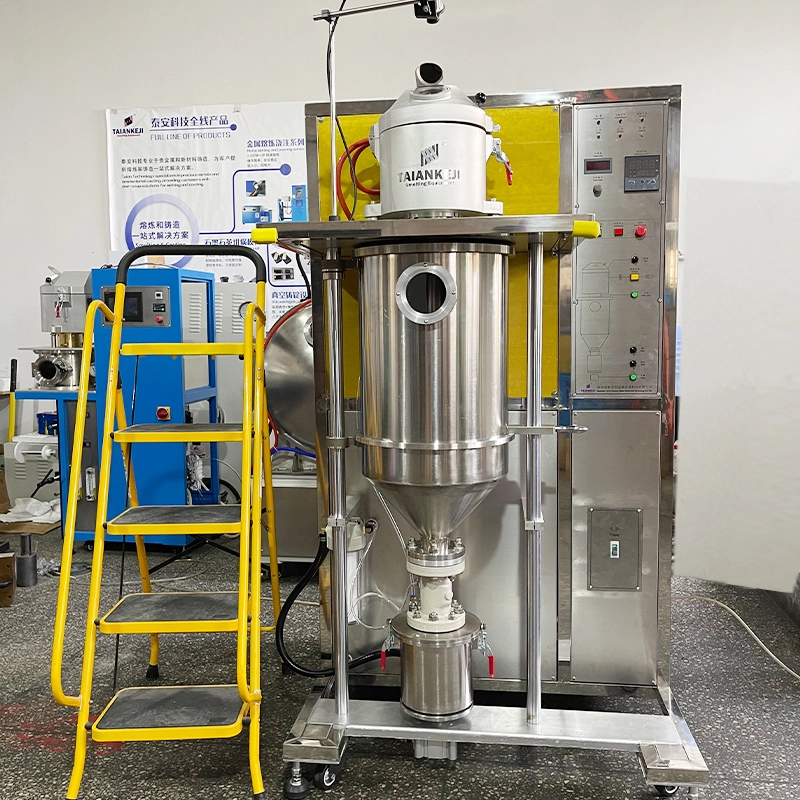
The machine is built around three physical sections: the melting room, the casting room and the intelligent operating system. Operation is deliberately simplified — a one-key sequence with a POKA YOKE foolproof system completes the whole process, and the page states that no professional training is required to run a batch.
Four questions settle almost every configuration. Answer them in order and the build sheet writes itself.
The page lists capacity as optional 1–30 kg for gold and 1 kg for platinum. If a single pour rarely exceeds a few kilos, the 8 kW GMI10 build covers it; if you are feeding a 10 kg-plus production rhythm, step up to the 30 kW QMI10 envelope and its 2–10 minute melt window.
Platinum, palladium, gold, silver, copper and various alloys are all documented for this machine. Platinum and palladium work in the smallest batches — 1 kg platinum is the stated figure — while gold, silver and copper scale up toward 30 kg.
Mesh size is adjusted by modulating water pressure, which is why the same machine is quoted as 50–300 mesh in the quick-spec block and 50–200 mesh in the parameter table and FAQ. Bring a target sieve cut to the conversation and confirm the working window for your alloy.
The machine can optionally be equipped with a vacuum pump to produce small batches under vacuum protection with low loss, and nitrogen or argon shielding gas is part of the standard specification. High-value metals that must not pick up oxygen usually justify the vacuum pump; routine alloy powder often runs on shielding gas alone.
Different buyers arrive at the same atomizer from different directions. The table below ties a real working scenario to the specification that decides it, so the comparison stays practical instead of theoretical.
| Scenario | Specification that matters | Decision it drives |
|---|---|---|
| University or R&D lab running platinum and palladium trials | Stated capacity of 1 kg for platinum, one-key POKA YOKE operation, Mitsubishi PLC with PID ±1 ℃ control | Start with the smallest documented configuration — the value here is repeatability and low scrap, not throughput. |
| Jewelry manufacturer reclaiming workshop gold and alloy scrap | 1–30 kg gold capacity; 30 kg of mixed metal raw material melted in about 15 minutes in the IGBT induction melting room | Size the build against your daily melt volume and choose the QMI10 power envelope if the melt window is the bottleneck. |
| Solder or alloy powder producer chasing a sieve cut | Mesh size controlled by adjusting water pressure; page notes roughly 90% of powder below 50 mesh | Bring your target mesh to the quote. Confirm whether 50–200 mesh or the wider 50–300 mesh figure applies to your alloy before committing to a specification. |
| Refiner processing high-value metal where oxidation loss is expensive | Optional vacuum pump for vacuum-protected, low-loss small batches; nitrogen or argon shielding gas also specified | Add the vacuum pump option when metal loss per batch outweighs the equipment cost; otherwise specify shielding gas and keep the footprint simpler. |
| New material plant planning a new powder room | 380 V three phase 50/60 Hz, 8 kW or 30 kW, 0.2–0.4 MPa water at 18–22 ℃, 3400 × 3200 × 3880 mm, approximately 2800 kg | Confirm floor loading, water supply capacity and gas routing with engineering before the machine is ordered, not during installation. |
Installation planning is where atomizer projects slip. The figures below come from the published parameter table, so use them as the starting point for your facility drawings.
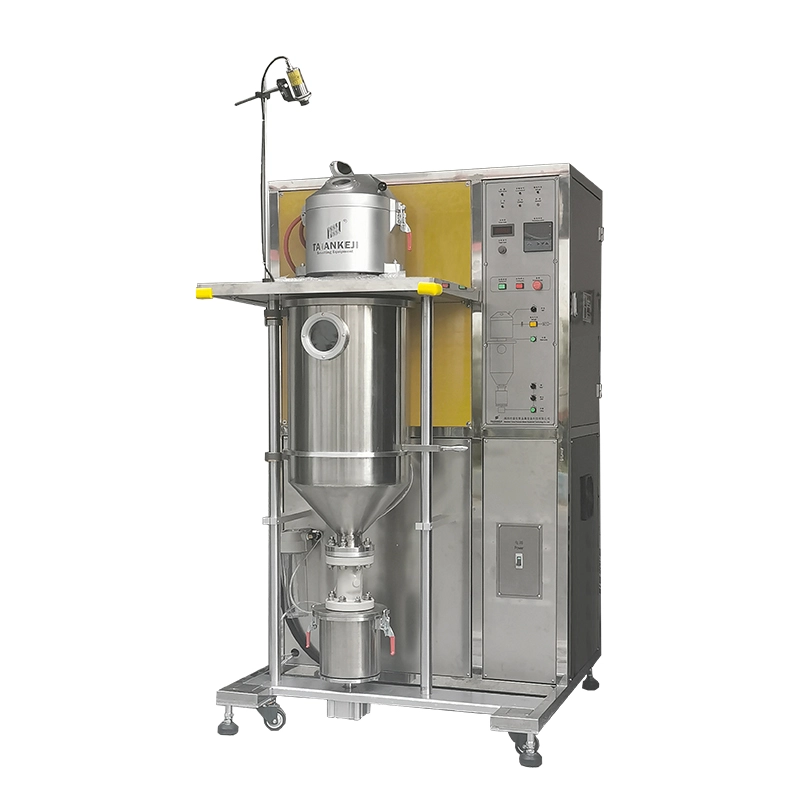
For a machine that runs unattended through a melt cycle, safety logic is a purchasing criterion rather than a bonus. This atomizer ships with short circuit protection, overcurrent protection, overvoltage protection, temperature protection, and water and electricity separation — if the machine fails, it automatically stops working. That combination is what makes the one-key cycle practical in a busy workshop.
Fastest route to an accurate price: send the metal you run, your largest single batch, the mesh window you need to hit, and whether you want the optional vacuum pump. That is enough for the team to propose a GMI10 or QMI10 configuration, confirm the capacity and temperature figures that apply to your alloy, and quote delivery and training. Capacity options, the vacuum pump, and the water-pressure-driven mesh setting are all configurable — ask for a custom build sheet rather than choosing from a fixed stock list.
Keep adjacent product options together for a faster catalog comparison.
Taeantech 500g mini rotary vacuum casting machine features a dual-chamber design and 2100°C temp for platinum and gold. Ideal for studios and dental clinics.
View product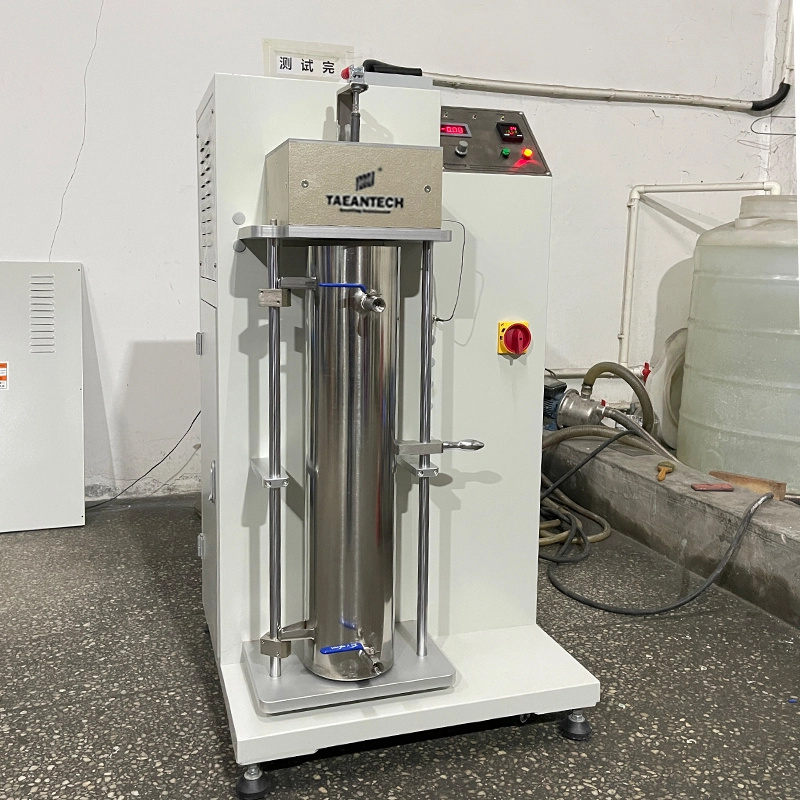
High-efficiency gold, silver, and copper granulating machine by Taeantech. Trusted metal granulator for clean, uniform metal granules.
View product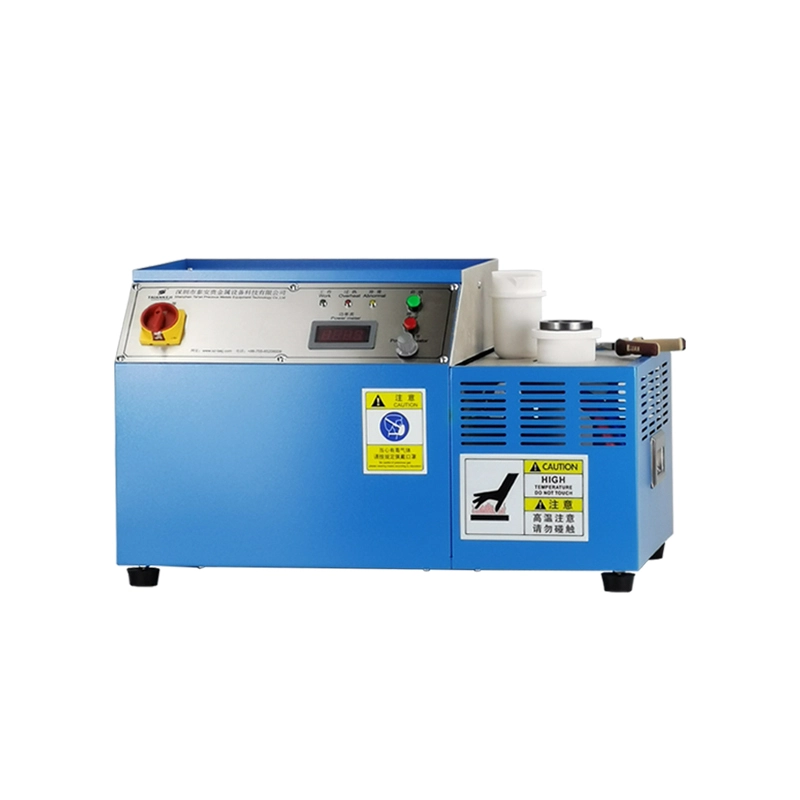
Taeantech's 1–2kg mini gold melting furnace, ideal for small-scale metal processing. Efficient, eco-friendly, and customizable for various industrial applications.
View productit melts metal raw material and breaks the molten stream apart with high-pressure water to produce metal powder. on this machine the igbt induction melting room heats the metal, the atomizing disk directs the water jet, and mesh size is controlled by adjusting the water pressure. the page notes that around 90% of the powder produced falls below 50 mesh.
platinum, palladium, gold, silver, copper and various alloys. the machine serves refining and purification plants, the solder industry, new material processing and precious metal processing.
the quick-spec block lists a 50–300 mesh powder size, while the parameter table and faq state 50–200 mesh. mesh size is adjusted through water pressure, so the practical working window depends on the alloy and the settings used. confirm the target mesh for your material with the team.
gmi10 runs at 8 kw total power and melts in 5–30 minutes; qmi10 runs at 30 kw and melts in 2–10 minutes. both share the same atomizing disk, vacuum pump, mitsubishi plc control system, shielding gas line, dimensions (3400 × 3200 × 3880 mm) and weight (approximately 2800 kg). choose on throughput and melt time rather than on machine concept.
the page describes optional capacity of 1–30 kg for gold and 1 kg for platinum, and states that 30 kg of various metal raw materials can be melted in 15 minutes. the parameter table lists 10 kg (gold) for both gmi10 and qmi10, so batch size should be confirmed for your specific alloy before ordering.
a 380 v three phase 50/60 hz supply at 8 kw or 30 kw, water at 0.2–0.4 mpa and 18–22 ℃, and nitrogen or argon shielding gas. the machine measures 3400 × 3200 × 3880 mm and weighs approximately 2800 kg. water flow rate, exhaust routing and floor loading allowances are not stated on the product page — request a site checklist before finalising your layout.