Jewelry Casting Model Finder

Vacuum Pressure Casting Machine Machines

Jewelry Casting Model Finder

Most buyers arrive already knowing they want vacuum and pressure in one melting cycle; the harder question is which capacity class fits the bench. This guide lines up the TAKJ-VC, VC05 and VC2 so you can compare vacuum pressure casting machine machines by gold capacity, voltage and flask size instead of by brochure wording, and it shows what to settle with a vacuum pressure casting machine manufacturer before a custom build is confirmed.

500 g – 4 kgOptional gold capacity band
±1 °CPID temperature control
4" x 10"Max flask size, VC05 / VC2
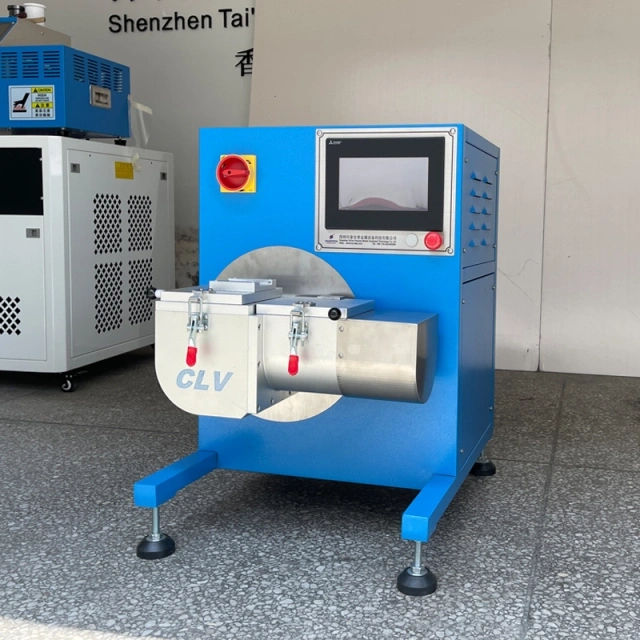
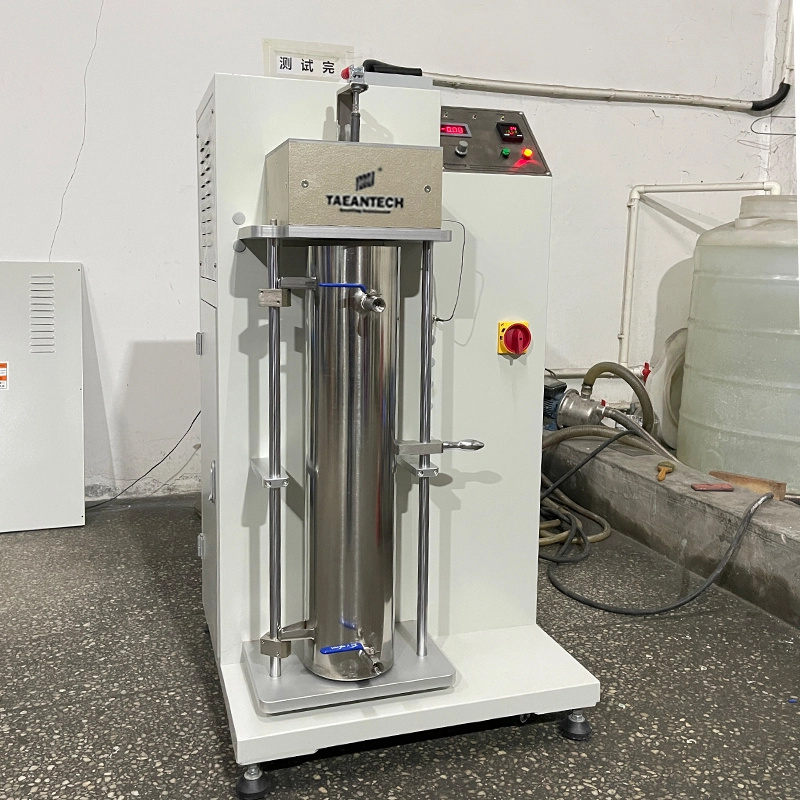
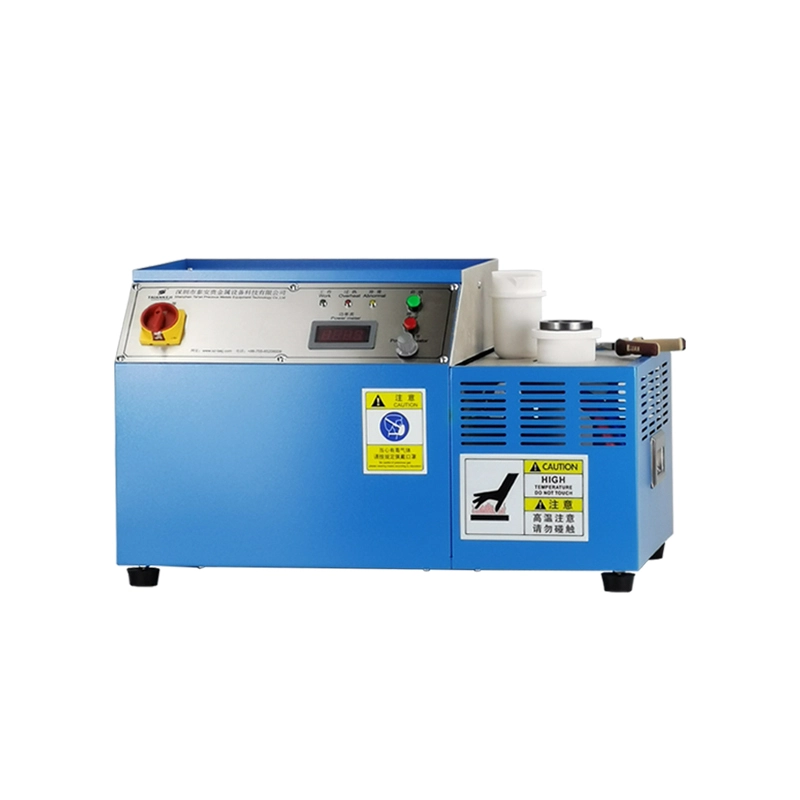
TAEANTECH 500g-4kg high temperature Vacuum Pressure Casting Machine

01 / Compare the models

Four configurations, one specification grid

Capacity and electrical supply separate these models faster than any other column. Read across the row for your target gold weight, then check the voltage you actually have on site.

Model Capacity (gold) Voltage / phase Power Max temperature Temp accuracy Pressure Max flask size Metals
VC05 500 g 220 V, 50/60 Hz, single phase 5 kW 1500 °C ±1 °C 0–3 bar casting pressure (adjustable) 4" x 10" inch Gold, silver, copper, alloys
VC2 2 kg 380 V, 50/60 Hz, 3 phases 8 kW 1500 °C ±1 °C 0–3 bar casting pressure (adjustable) 4" x 10" inch Gold, silver, copper, alloys
TAKJ-VC 500 g – 4 kg optional 380 V three phase, 50/60 Hz 30 kW max 1500 °C ±1 °C 10–120 kPa adjustable pressurising pressure Not stated — confirm on quote Platinum, gold, silver, copper, alloy
TAKJ-VC-W Configured to order (narrative mentions 1–5 kg) 110 V / 220 V / 380 V options mentioned Confirm on quote Confirm on quote ±1 °C (PID control panel) Confirm on quote Confirm on quote Precious metals per configuration

Note: the VC05 and VC2 are bench and shop production class machines with POKA YOKE foolproof operation; the TAKJ-VC and TAKJ-VC-W are built to order and their notes are confirmed on the quotation.

Read the numbers carefully: three values differ inside the same product page

  • Maximum temperature: the specification tables list 1500 °C, while the feature description states a maximum of 2100 °C for platinum, palladium and rhodium.
  • Capacity: the page title and parameter block list 500 g – 4 kg, while the narrative text mentions customisation from 1–5 kg.
  • Pressure wording: the parameter block lists 10–120 kPa pressurising pressure, while the model table lists 0–3 bar casting pressure.

Ask for the written specification sheet for your exact configuration before an order is placed, so the temperature ceiling, capacity and pressure range on the quotation match what you will run.

02 / Route by scenario

Start from your bench, not from the model name

Each scenario below maps to a concrete configuration and to the one value you should confirm before you commit.

Scenario 01

Studio bench, small-lot jewelry

A single bench running short gold and silver runs fits the VC05 class: 500 g gold capacity, 220 V single-phase supply and 5 kW power in a compact enclosure.

Check this specYour wall supply is 220 V single phase, and 500 g of gold covers your largest single flask.
View the VC05 specification →

Scenario 02

Shop production around 2 kg

When daily output sits in the 2 kg band and you already run three-phase power, the VC2 class doubles the gold capacity of the bench unit at 8 kW.

Check this specThree-phase 380 V is available, and the 4" x 10" flask limit matches the moulds you buy.
View the VC2 specification →

Scenario 03

Platinum group and high-temperature work

The feature description states a 2100 °C setting for platinum, palladium and rhodium, with 1600 °C kept for gold, silver and lower-temperature metals.

Check this specThe specification tables list a 1500 °C maximum, so ask for the high-temperature capability in writing.
See the high-temperature configuration →

Scenario 04

Custom build or larger batch

The TAKJ-VC-W build is configured to order, with capacity options across the range plus voltage adjustment, interface language and OEM casing discussed at quotation.

Check this specConfirm whether your run needs 4 kg or 5 kg, and which flask size the chamber will accept.
Start a custom configuration →
Melting chamber and casting chamber of the vacuum pressure casting machine

03 / Feature to defect

What each feature actually prevents

Casting problems are rarely a single failure. The useful way to read a machine's feature list is to ask which defect each item removes from your finished piece, and then decide whether that defect costs you more than the step up in specification.

  • Two independent chambers: melting and casting are separated so the pressure difference drives metal into the mould during pouring.
  • 10–120 kPa controlled atmosphere: precious metal is kept away from air across the cycle.
  • Vibration assist: the page states it improves surface quality and reduces finishing work.
Feature What it does Defect it prevents

Dual independent chambers

Melting and casting chambers are completely independent, and the pressure difference controls injection of the metal into the mould during pouring.

Incomplete fill and misruns on thin sections

High-vacuum protection

A high-vacuum environment is held under 10–120 kPa pressurising pressure, so the metal does not meet air during the pour.

Oxidation loss, bubbles and porosity

Vibration technology

The page states vibration reduces losses, optimises quality and delivers what it describes as the most perfect product surface with the least processing.

Trapped gas and heavy post-cast finishing

PID control with Mitsubishi PLC

The PID panel holds the temperature difference to ±1 °C, and the Mitsubishi human-machine interface supports a one-click casting cycle.

Temperature drift between one cast and the next

Induction heating in a sealed cycle

Induction coils and intelligent heating logic are described as using less electricity than traditional resistance systems, inside a sealed system.

Metal loss and energy waste on every melt

Fully enclosed, compact footprint

The machine is described as a compact, fully enclosed unit intended for jewelry workshops and small laboratories.

Uncontrolled shop dust and open-flame handling around the melt

04 / Metal and temperature

Match the setting to the metal you melt

The page describes two temperature settings rather than one fixed ceiling. Which one applies to you depends entirely on the metal group in your flask, so decide the metal first and the machine specification second.

Metal group Setting described What to confirm
Gold, silver 1600 °C setting for low-temperature metals Specification tables list 1500 °C as the maximum
Copper, alloys Listed among melting metals for the parameter block Casting pressure range for the alloy you use
Platinum, palladium, rhodium 2100 °C setting per the feature description Written confirmation of the rated maximum
Atmosphere Argon or nitrogen listed for VC05 and VC2 Gas supply and regulator sizing on site

The two temperature figures on the product page do not agree. Treat 2100 °C as a setting that must be confirmed for your configuration, and do not plan platinum-group production on the assumption that every model in the range carries the same ceiling.

Control panel detail on the high-temperature vacuum pressure casting machine
Casting chamber and flask area of the vacuum pressure casting machine

05 / Capacity and floor planning

Capacity is a throughput decision, not just a number

Gold capacity tells you how much metal one cycle can handle. Throughput comes from the melt time you repeat, and floor planning comes from the footprint and weight of the cabinet. Plan all three together before you pick a class.

  • Melt time: 3–5 minutes listed for both the VC05 and VC2 classes, so repeated short cycles — not one large melt — drive daily output.
  • Footprint: 680 × 680 × 1250 mm for the VC05 and VC2 cabinet, which sets the bench or floor space you need to reserve.
  • Weight: approximately 260 kg for those two classes, so check floor loading and how the unit will be moved into the workshop.
  • Flask limit: a 4" x 10" inch maximum flask size is listed for VC05 and VC2; larger flasks need a different configuration confirmed on the quotation.

06 / Built to order

Voltage, language and casing configured before build

The page describes custom-built options rather than a single fixed export version. If your workshop runs on 110 V, needs a specific interface language, or wants an OEM casing, those details are settled at quotation stage — which means the quote request should carry them from the start.

  • Voltage adjustment: 110 V, 220 V and 380 V options are mentioned, alongside the fixed 220 V single-phase and 380 V three-phase listings.
  • Interface language: the human-machine interface language can be specified with the order.
  • OEM casing: casing options are raised for buyers who need their own branding on the unit.
  • Capacity class: the 500 g – 4 kg band in the title and parameter block, with the narrative text also mentioning 1–5 kg.
Vacuum pressure casting machine casing and configuration detail
Compact enclosed vacuum pressure casting machine for a jewelry workshop

07 / After the order

Support, spares and delivery expectations

A casting machine is a long-running bench asset, so the questions worth asking are about what happens in year two, not only what the cabinet does on day one.

  • Technical support: the page states technical support is provided for the machine.
  • Spare parts supply: spare parts availability is stated as part of the offer, which matters for consumable and wear items.
  • Fast shipping: shipping speed is listed as a supply commitment; confirm the lead time for your configuration and destination with the team.
  • One-click operation: the PLC interface is designed so a trained operator can repeat a stored cycle rather than rebuild settings each melt.

Request a quote with your exact configuration

Send the metal you cast, the gold weight per flask, your voltage and phase, the flask size you buy and the interface language you need. Those five details are what turn a general quotation into a machine specification you can compare line by line.

Vacuum pressure casting machine prepared for delivery

Related Reading

Three notes to help clarify product requirements before contacting the supplier.

How Dual Chamber Vacuum Pressure Casting Fills a Jewelry Flask

A dual chamber vacuum pressure casting machine melts metal in one sealed vessel and fills the mold in a second, using the pressure difference between them to drive liquid metal into a jewelry flask.

Read article

Why Does Vibration Reduce Porosity in Jewelry Casting?

Vibration-assisted casting can help jewelry castings fill and de-gas more reliably, but its value depends on where bubbles and shrinkage form as the metal solidifies.

Read article

Melting Time and Cycle Stages in Jewelry Vacuum Casting

A 3–5 minute melting figure describes the heating stage of one batch, not the full jewelry casting cycle that runs from flask loading to tree cut-off.

Read article

Frequently Asked Questions

What information is shown for this product?

Review the product details, images, and specifications presented on the official product page.

Where can I check the intended application?

Use the application and use-case information published on the official product page.

Which specifications should I confirm before ordering?

Confirm the specifications and options listed for the exact product variant before placing an order.

Where can I check available options?

Check the official product page or ask the supplier about options shown for the selected product.

How can I request product information?

Use the official contact or inquiry path provided on the site.

What should I include in an inquiry?

Include the product page, intended use, required quantity, and any specifications you need the supplier to review.

CONTACT US

If you have any queries, get in touch today! Don't hesitate. We try to take the extra step for our customer satisfaction.
Name
Email *
Message
Leave a message
Name
Email *
Message
Message Us