High Purity: The graphite content of Taeantech high purity graphite mold is as high as 99.9% and the content of impurities (such as silicon, iron, calcium, etc.) is very low, ensuring that the gold and silver bars will not be polluted during the casting process, thus ensuring the purity and quality of the ingots. The low impurity content helps to reduce the surface defects and internal defects of the gold bar and improve the finish and evenness of the finished product.
High Thermal Conductivity: The graphite mold has very high thermal conductivity and can quickly and evenly conduct heat, ensuring that the temperature distribution of the gold and silver bar is uniform during the casting process, and avoiding deformation or cracks caused by local overheating or uneven cooling. High thermal conductivity helps shorten the casting cycle and improve production efficiency.
High Cost Performance: High purity graphite mold can still maintain structural stability at high temperatures (such as above 1700℃), is not easy to soften or deformation, suitable for long-term high temperature operation. This thermal stability can reduce mold losses, extend service life, and reduce production costs.
Diversified Design: Graphite is soft and easy to produce complex shapes through mechanical processing (such as milling, drilling, etc.) to meet the diversified design needs of gold bars and silver bars.
Environmental Protection: graphite itself is non-toxic and harmless, in line with environmental requirements. After use, the graphite mold can be treated with high temperature to remove the residual metal, achieve reuse, and reduce the waste of resources.

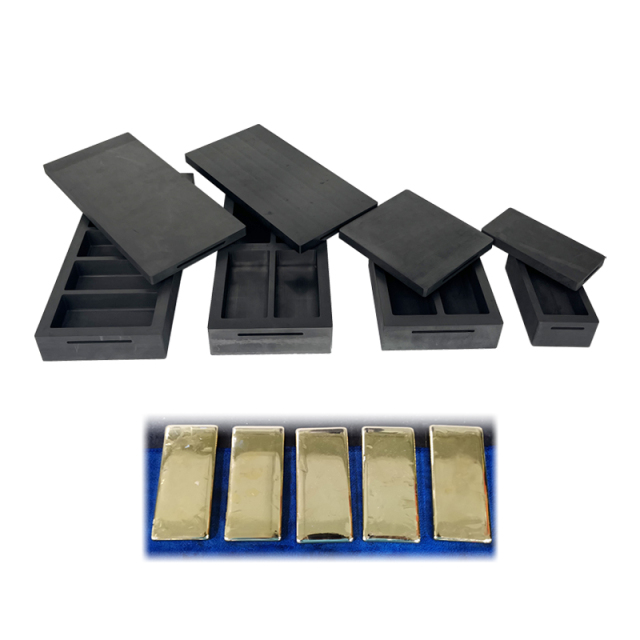


Yes — four 1 kg cavities in one block, so a single pour gives you four bars. Match it to your melt: with 4 kg of metal ready and a pour you can finish before the metal starts to set, this gold bar mold drops straight into your cycle. If your market wants 1 kg bars, you are set; if you sell larger bars, size up before you order.
Yes — the graphite is selected so gold and silver bars are not polluted during casting, and silver ingots run through the same block with no change in procedure. If your silver line needs a different bar weight or cavity layout, talk to us about a custom graphite gold bar mold for ingot casting before the block is made; cavity size and layout are fixed once it is machined.
No. Silicon, iron and calcium are held at very low levels in this graphite, so the mould does not pollute the gold or silver while it is molten. That protects your assay and saves you a re-refining pass. Contamination in practice usually comes from residue, not the block: keep the cavity clean of leftover metal and flux between pours, and store the mould dry.
One year free warranty runs from the date of purchase, and our engineers give you one-on-one guidance on running the mould. Use that guidance from the first heat: pre-heating and careful handling decide whether a graphite block survives its first weeks in a workshop. When you pick a gold bar mold supplier, weigh how fast they answer when a block cracks, because that stops your line.
The graphite is 99.9% pure, and that number drives the quality of the bar you take out of it. Cavity count tells you throughput; grade tells you how the bar face and the inside of the ingot come out after cooling. Get the grade in writing before you buy, then match it to the metal you cast most often.
The grade keeps impurity-driven surface and internal defects down, so bars come off with better finish and evenness and need less polishing before hallmarking or packing. Look at the cavity face before the first pour and clear any machining residue. After that, steady pre-heating protects the finish; a cold block hit with molten gold is where rough bars and short mould life both start.